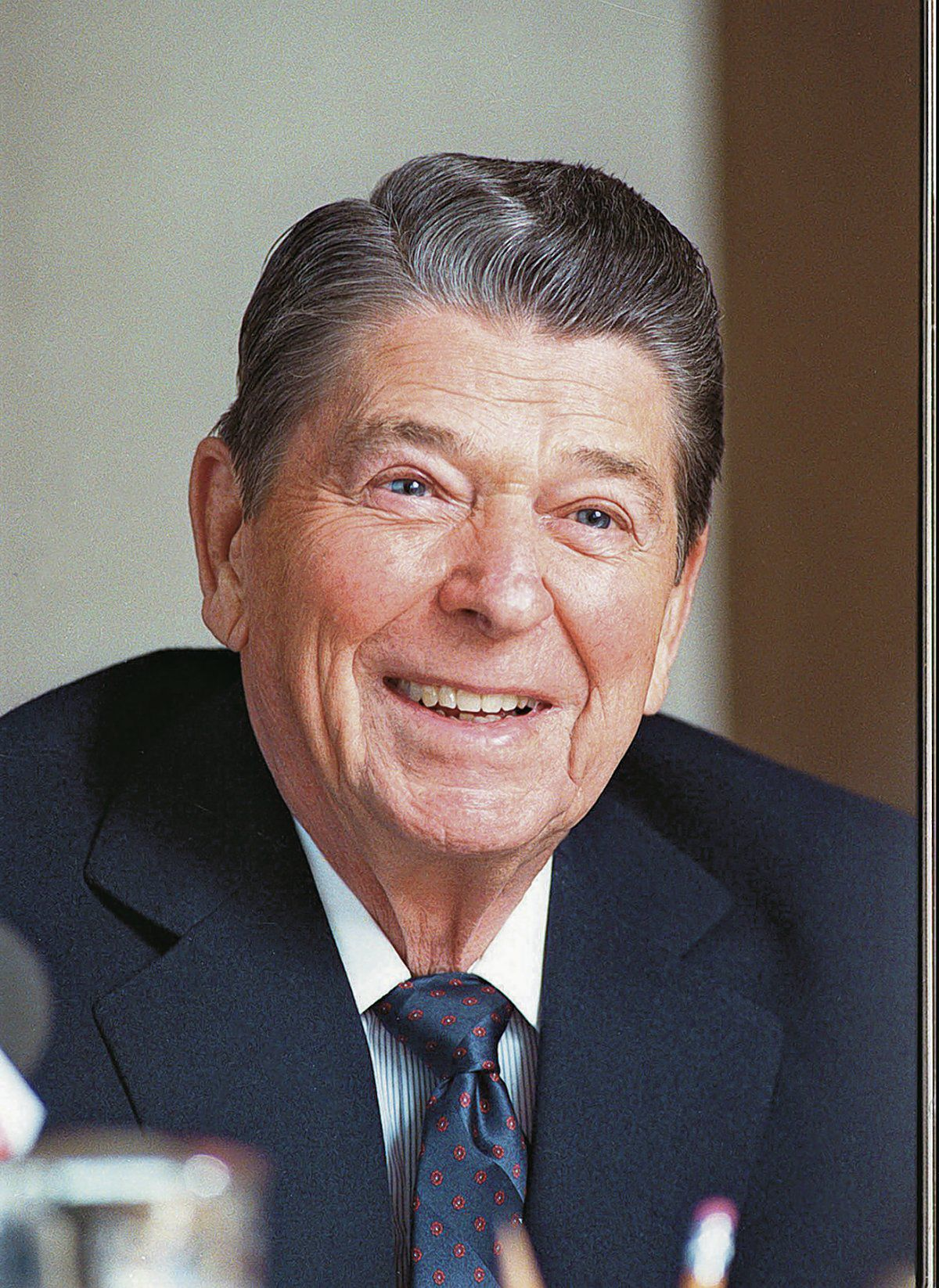
As I had previously written, Republicans took a beating in the 1958 midterms, especially in the Senate, and that gave liberals an edge for decades. However, the socioeconomic conditions of the 1970s were wearing on the voters who were looking for something different. This came in the form of Ronald Reagan in 1980. Presidents do not always have coattails in their elections, but Reagan did, and 12 Senate seats flipped from Democrat to Republican and the Republicans won a net 36 House seats.
The presidential votes of the states in which Republicans benefited in 1980:
Alabama
1976: Carter +13.11
1980: Reagan +1.3
Alaska
1976: Ford +22.25
1980: Reagan +27.94
California
1976: Ford +1.78
1980: Reagan +16.78
Connecticut
1976: Ford +5.17
1980: Reagan +9.63
Florida
1976: Carter +5.28
1980: Reagan +17.02
Georgia
1976: Carter +33.78
1980: Carter +14.81
Idaho
1976: Ford +22.76
1980: Reagan +41.27
Indiana
1976: Ford +7.62
1980: Reagan +18.35
Iowa
1976: Ford +16.12
1980: Reagan +12.7
Michigan
1976: Ford +9
1980: Reagan +6.49
Missouri
1976: Carter +3.63
1980: Reagan +6.81
Nebraska
1976: Ford +20.74
1980: Reagan +39.49
New Hampshire
1976: Ford +11.28
1980: Reagan +29.39
New Jersey
1976: Ford +2.16
1980: Reagan +13.42
New Mexico
1976: Ford +22.02
1980: Reagan +18.18
New York
1976: Carter +4.43
1980: Reagan +2.67
North Carolina
1976: Carter +11.05
1980: Reagan +2.12
Oregon
1976: Ford +9.95
1980: Reagan +9.66
Pennsylvania
1976: Carter +2.66
1980: Reagan +7.11
Rhode Island
1976: Carter +17.47
1980: Carter +10.47
South Carolina
1976: Carter +13.04
1980: Reagan +1.53
Texas
1976: Carter +3.17
1980: Reagan +13.86
Utah
1976: Ford +12.46
1980: Reagan +52.2
Virginia
1976: Ford +1.34
1980: Reagan +12.72
Washington
1976: Ford +3.88
1980: Reagan +12.34
West Virginia
1976: Carter +16.14
1980: Carter +4.51
Wisconsin
1976: Carter +1.68
1980: Reagan +4.72
Democratic Gains:
Maryland
1976: Carter +6.07
1980: Carter +2.96
North Dakota
1976: Ford +5.85
1980: Reagan +37.97
The Senate races in which Democrats lost seats to Republicans were:
Alabama – Democratic Senator Donald W. Stewart loses renomination to Fob James, who loses the election to Republican war hero Jeremiah Denton.
Alaska – Democratic Senator Mike Gravel loses renomination to Clark Gruening, who loses the election to Republican Frank Murkowski.
Florida – Democratic Senator Richard Stone loses renomination to former Congressman Bill Gunter, who loses the election to Republican Paula Hawkins.
Georgia – Democratic Senator Herman Talmadge, who had been censured by the Senate on ethics issues, loses his bid for reelection to Republican activist Mack Mattingly.
Idaho – Democratic Senator Frank Church, who was most known for the Church Committee uncovering illegal activities by the FBI and CIA, loses his bid for a fifth term to Republican Congressman Steve Symms. Church to this day is the last Democrat to represent the state in the Senate.
Indiana – Democratic Senator Birch Bayh, who sponsored the Equal Rights Amendment and ran for the Democratic nomination for president in 1972, loses reelection to Republican Congressman and future Vice President Dan Quayle.
Iowa – Democratic Senator John Culver loses reelection to Republican Congressman Chuck Grassley, who still serves today.
New Hampshire – Democratic Senator John Durkin loses reelection to Republican Warren Rudman.
North Carolina – Democratic Senator Robert B. Morgan loses reelection to Republican John Porter East.
South Dakota – Democratic Senator George McGovern, the famously liberal Democratic presidential nominee in 1972, loses reelection by 20 points to Republican Congressman James Abdnor.
Washington – Democratic Senator Warren Magnuson, the most senior senator as he had served since 1944 and had as a representative sponsored the bill ending the Chinese Exclusion Act, is defeated for reelection by Republican State Attorney General Slade Gorton.
Wisconsin – Democratic Senator Gaylord Nelson, who had been a major environmentalist and promoter of Earth Day, loses reelection to Republican former Congressman Bill Kasten.
There were also some races that shifted the state’s seat to the right:
New York – Republican Al D’Amato defeated longtime liberal Jacob Javits for renomination and then narrowly won a three-way race.
Oklahoma – Republican Don Nickles succeeds retiring Republican Henry Bellmon. The former is considerably more conservative than the latter.
There was one that shifted the state’s seat to the left:
North Dakota – Republican Milton Young is succeeded by Republican Congressman Mark Andrews, who proves himself a bit of a rebel regarding the Reagan Administration in his one term.
Although the House was bad for Democrats, their majority was enough so that they kept the House.
California
Democratic Congressmen Harold Johnson, James Corman, James Lloyd, and Lionel Van Deerlin lose reelection to Republicans Eugene Chappie, Bobbi Fiedler, David Dreier, and Duncan Hunter respectively.
Connecticut
Republican Lawrence DeNardis wins in the 3rd district after the retirement of Congressman Robert Giaimo. His opponent, notably, was Joe Lieberman.
Florida
Democratic Congressman Robert Stack loses renomination in the 12th district, and Republican Clay Shaw wins the district.
Indiana
Democratic Congressman John Brademas loses reelection to Republican John P. Hiler.
Michigan
Democratic Congressman Bob Carr loses reelection to Republican James W. Dunn.
Minnesota
Democratic Congressman Rick Nolan chooses not to run again, and he is succeeded by Republican Vin Weber.
Missouri
Democratic Congressman Richard Ichord retires, and he is succeeded by Republican Wendell Bailey. Ichord was by this point quite conservative, so exchanging him for Bailey is no great loss for liberalism.
Democratic Congressman Bill Burlison is defeated for reelection by Republican Bill Emerson.
Nebraska
Democrat John Cavanaugh retires and is succeeded by Republican Hal Daub.
New Jersey
Democratic Congressmen Frank Thompson and Andrew Maguire are defeated for reelection by Republicans Chris Smith and Marge Roukema respectively. The previously popular Thompson’s loss was by 16 points on account of him being implicated in the Abscam scandal. Chris Smith still serves in Congress today.
New Mexico
Democratic Congressman Harold Runnels died before the 1980 election, and he is succeeded by Republican Joe Skeen. Like with Ichord in Missouri, Runnels had been quite conservative by this point.
New York
Democratic Congressmen Jerome Ambro, Lester Wolff, and John Murphy lose reelection to Republicans Gregory W. Carman, John LeBoutillier, and Guy Molinari respectively.
Democrat James Hanley retires, and Republican George Wortley wins the election.
North Carolina
Democratic Congressmen L. Richardson Preyer and V. Lamar Gudger lose reelection to Republicans Walter Johnston and Bill Hendon respectively.
Ohio
Democratic Congressman Thomas Ashley loses reelection to Republican Ed Weber.
Oregon
Democratic Congressman Albert Ullman loses reelection to Republican Denny Smith.
Pennsylvania
Democratic Congressmen Peter Kostmayer and Ray Musto lose reelection to Republicans James Coyne and James Nelligan respectively.
Rhode Island
Democratic Congressman Edward Beard loses reelection to Republican Claudine Schneider.
South Carolina
Democratic Congressman Mendel Davis retires, and Republican Thomas Hartnett wins the seat.
Democratic Congressman John Jenrette, implicated in the Abscam scandal, loses reelection to Republican John Napier.
Texas
Democratic Congressman Bob Eckhardt loses reelection to Republican Jack Fields.
Utah
Democratic Congressman K. Gunn McKay loses reelection to Republican James Hansen.
Virginia
Democratic Congressman Dave Satterfield retires and Republican Thomas Bliley wins the seat. Satterfield was quite conservative so this is no great loss for liberal Democrats.
Democratic Congressmen Herb Harris and Joe Fisher lose reelection to Republicans Stan Parris and Frank Wolf respectively.
Washington
Democratic Congressman Mike McCormack loses reelection to Republican Sid Morrison.
West Virginia
Democratic Congressman Harley Staggers retires, and Republican Cleve Benedict wins the election to succeed him.
Democratic Congressman John G. Hutchinson loses reelection to Republican Mick Staton.
Wisconsin
Democratic Congressman Alvin Baldus loses reelection to Republican Steve Gunderson.
Democratic Gains:
California
Republican Congressman William Royer is defeated for reelection by Democrat Tom Lantos. Royer had won a special election after Democratic Congressman Leo Ryan was murdered on the orders of Jim Jones by followers of the People’s Temple.
Maryland
Republican Robert Bauman, hindered by a gay sex scandal, is defeated for reelection by Democrat Roy Dyson.
North Dakota
Republican Congressman Mark Andrews runs for the Senate and wins, and Democrat Byron Dorgan wins the seat.
Ohio
Republican Congressman Samuel Devine loses reelection to Democrat Bob Shamansky in a stunning upset; his district was and still is Republican.
Overall
This election constituted perhaps most of all a repudiation of President Carter. It was also a turn away from many liberal policies of the 1960s and 1970s, given the losses of some big names in liberalism, such as Indiana’s Bayh, South Dakota’s McGovern, and Wisconsin’s Nelson. The Democrats would make something of a comeback in 1982 given the recession brought on by interest rate hikes from the Fed, although the Republicans would hold the Senate until 1987. One of the biggest takeaways was that it was the first time since 1952 that the Republicans won the Senate, and heralded the end of the era of Democratic dominance of the legislative branch, which had lasted since the 1932 election, as Republicans until 1980 only won control of any House of Congress twice.
 Mad Politics: The Bizarre, Fascinating, and Unknown of American Political History