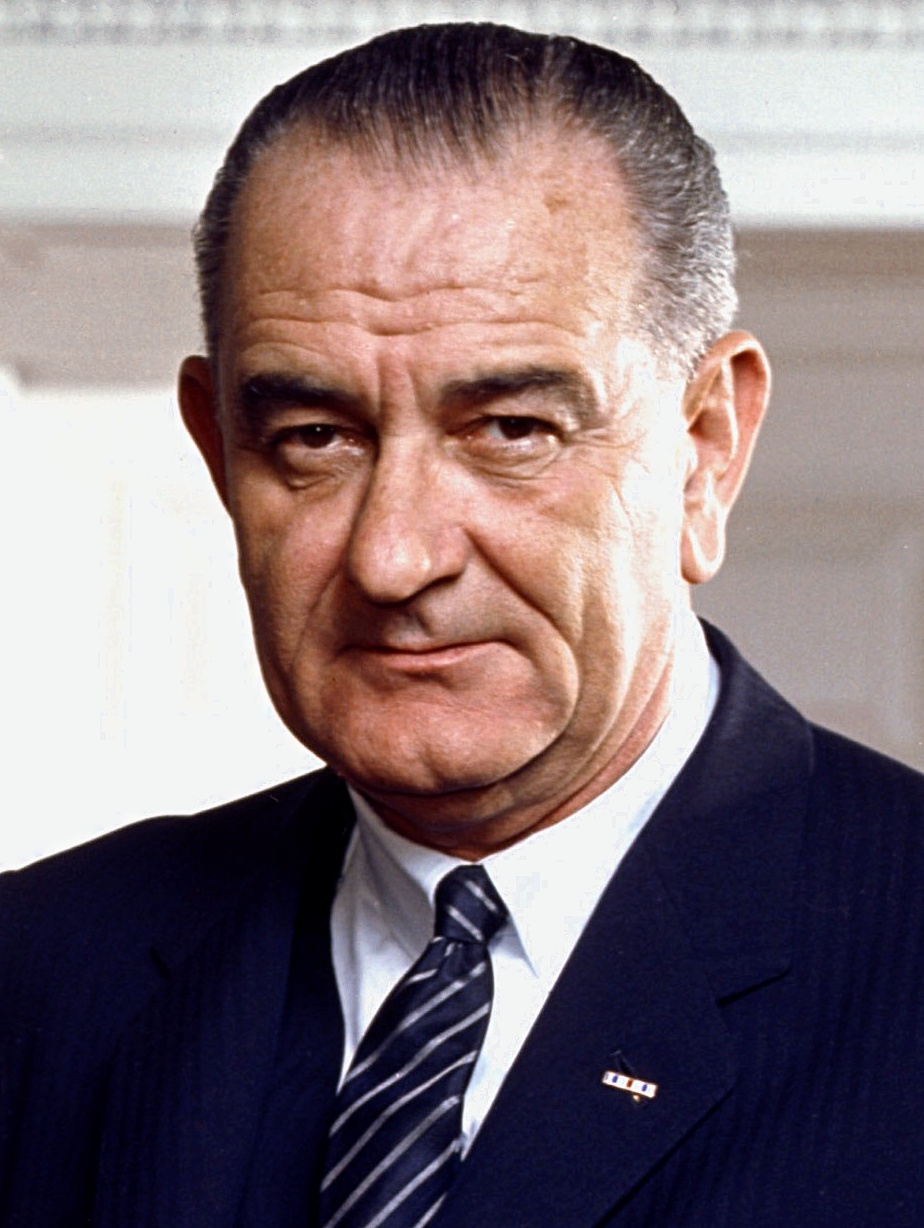
I’m going to get something out of the way about this election: the GOP stood zero chance of winning the presidency. The American public was highly sympathetic to Lyndon B. Johnson as he was seen as carrying on the legacy of the murdered JFK. Thus, for the Republicans, the real race was who was going to win party control, and this is where Barry Goldwater comes in. Goldwater was the most conservative senator in this time and regarded as a national spokesman for conservatism. The moderate to liberal Republicans by contrast put forth Governor William Scranton of Pennsylvania and Governor Nelson Rockefeller of New York. The mood for these candidates is low among GOP primary voters, and Goldwater is nominated.
Goldwater doesn’t do himself a whole lot of favors on the campaign trail as he is brash and uncompromising. Some admire him for this, but his vote against the Civil Rights Act of 1964 devastates black support for the GOP, his advocacy for selling the Tennessee Valley Authority harms him in the peripheral South, and his cavalier talk on nuclear weapons scares off numerous voters. LBJ notoriously capitalized on the latter through the airing of the “Daisy” ad, implying that nuclear war would be the result of a Goldwater presidency. The Goldwater campaign’s grand strategy was to try to tick off LBJ, thus his pick of Congressman William Miller (R-N.Y.) for vice president, who was selected for his ability to get under Johnson’s skin. It didn’t work, and Miller added nothing to the ticket for the voters. Although the Goldwater run inspired generations of conservatives, his run depressed support for other Republicans as well, giving LBJ the Congress he needed to pass Great Society legislation in the next Congress.
The 1964 election brought about some permanent changes in American politics. For one, the black vote became near uniformly Democratic. Republicans from this point forward would not win more than 15% of the black vote in presidential elections. By contrast, from 1936 to 1960, although Republicans didn’t win a majority, they commanded a significant minority. Richard Nixon had won one in three of their votes in 1960. This election would be the first time in which the GOP was considered an option in the Deep South; Goldwater only won his home state of Arizona and five Southern states. This election’s biggest impact legislatively was in the House, where incumbents were dragged down by Barry Goldwater being at the top of the ticket. Republicans on the Eastern seaboard in particular took a drubbing, although it was the case in many states that those who usually voted Republican found themselves voting for Democrat LBJ, seeing Goldwater as too extreme and brash. This would be the last time Alaska, Idaho, Kansas, Nebraska, North Dakota, Oklahoma, South Dakota, Utah, and Wyoming voted for the Democratic candidate for president. This would be the first time Georgia ever voted for the Republican candidate, a jarring result given that Kennedy had his second strongest performance (his best was Rhode Island). Others were turned off by his stances on civil rights.
I’m going to list each of the states in which Democrats gained in the House or Senate, and their presidential votes in 1960 and 1964.
California
1960: Nixon +0.55
1964: Johnson +18.32
Colorado
1960: Nixon +9.72
1964: Johnson +23.07
Connecticut
1960: Kennedy +7.46
1964: Johnson +35.72
Illinois
1960: Kennedy +0.18
1964: Johnson +18.94
Indiana
1960: Nixon +10.43
1964: Johnson +12.42
Iowa
1960: Nixon +13.49
1964: Johnson +23.97
Kentucky
1960: Nixon +7.18
1964: Johnson +28.36
Maine
1960: Nixon +14.10
1964: Johnson +37.68
Maryland
1960: Kennedy +7.22
1964: Johnson +30.94
Michigan
1960: Kennedy +2.01
1964: Johnson +33.61
Nebraska
1960: Nixon +24.14
1964: Johnson +5.22
New Hampshire
1960: Nixon +6.84
1964: Johnson +27.78
New Jersey
1960: Kennedy +0.8
1964: Johnson +31.75
New Mexico
1960: Kennedy +0.64
1964: Johnson +31.75
New York
1960: Kennedy +5.26
1964: Johnson +37.25
North Dakota
1960: Nixon +9.9
1964: Johnson +16.09
Ohio
1960: Nixon + 6.56
1964: Johnson +25.89
Pennsylvania
1960: Kennedy +2.32
1964: Johnson +30.22
Texas
1960: Kennedy +2
1964: Johnson +26.82
Utah:
1960: Nixon +9.64
1964: Johnson +9.73
Washington
1960: Nixon +2.41
1964: Johnson +24.59
Wisconsin
1960: Nixon +3.72
1964: Johnson +24.35
Wyoming
1960: Nixon +10.02
1964: Johnson +13.12
States in which Republicans gained in their presidential votes in 1960 and 1964:
Alabama
1960: Kennedy +14.23
1964: Goldwater +38.90
Georgia
1960: Kennedy +25.11
1964: Goldwater +8.25
Idaho
1960: Nixon +7.56
1964: Johnson +1.83
Mississippi
1960: Byrd (unofficial Independent candidate) +2.65
1964: Goldwater +74.28
South Carolina:
1960: Kennedy +2.48
1964: Goldwater +17.79
The Democratic Wins
California
First-term Republican Representative Patrick Martin was defeated by Democrat John Tunney, future senator and son of boxer Gene Tunney. Martin had voted against the Civil Rights Act of 1964.
Colorado
Republicans Donald Brotzman and J. Edgar Chenoweth lose reelection to Democrats Roy McVicker and Frank Evans respectively. Brotzman would win back his seat in 1966.
Connecticut
Republican Abner Sibal loses reelection to former Democratic Congressman Donald Irwin.
Illinois
Republican Robert McLoskey, who voted for the Civil Rights Act of 1964, went down to defeat to Democrat Gale Schisler.
Indiana
Republican Earl Wilson went down to defeat to Democrat Lee Hamilton, who would have a long career in Congress. He had voted for the House version of the Civil Rights Act of 1964 only to turn around and vote against the final version. Republican Donald Bruce would make an unsuccessful run for the Senate and his district would be won by Democrat Andy Jacobs Jr.
Iowa
Congressmen Fred Schwengel, James Bromwell, John Kyl, and Ben Jensen lost reelection. Republican Charles Hoeven retired and his seat was won by a Democrat. With the exception of Jensen, all had voted for the Civil Rights Act of 1964. H.R. Gross was the only survivor among the Republicans. Representatives Fred Schwengel and John Kyl would win back their seats in the 1966 midterms, and Iowa’s 6th and 7th districts would be won back by Republicans in that election as well.
Kentucky
Down went hardcore conservative Gene Snyder of Louisville to Democrat Charles Farnsley. Snyder had voted against the Civil Rights Act of 1964, but he would return in the more Republican 4th district in the 1966 midterms and Louisville would elect the more moderate Republican William Cowger that year.
Maine
Republican Clifford McIntire of Maine retired to run for the Senate against Ed Muskie, and the seat was won in a landslide by future Democratic Senator William Hathaway.
Maryland
Republican Senator J. Glenn Beall lost reelection to Democrat Joseph Tydings by a whopping 25 points. Beall had won a tough reelection in 1958, another bad year for Republicans.
Michigan
George Meader, August Johansen, and Victor Knox lost reelection to Democrats Weston Vivian, Paul Todd, and Raymond Clevenger respectively. All three had voted against the Civil Rights Act of 1964. All of their seats would be won back by more moderate Republicans who supported civil rights legislation in the 1966 midterms.
Nebraska
Ralph Beermann of the 1st district, the state’s most conservative elected official who voted against the Civil Rights Act of 1964 and did no wrong by Americans for Constitutional Action and no right by Americans for Democratic Action, went down to defeat to Democrat Clair Callan. Incidentally, this would be the last time a Democrat won the state’s 1st district.
New Hampshire
Democrat J. Oliva Huot defeated Republican Louis Wyman for reelection. Wyman had voted against the Civil Rights Act of 1964, but he would be returned to office in the 1966 midterms.
New Jersey
The 1964 election was frankly quite bad for Republicans in New Jersey, as LBJ won all the state’s counties and almost 2/3’s of the vote. By contrast, JFK had won the state by less than a point in 1960.
Republicans Milton Glenn and Frank Osmers went down to defeat to Democrat Thomas McGrath and Henry Helstoski respectively while retiring James Auchincloss and George Wallhauser were replaced by Democrats James Howard and Paul Krebs. All of them had voted for the Civil Rights Act of 1964. Glenn’s seat would be won back in the 1966 midterms and Wallhauser’s seat would be integrated into another Republican’s district.
New Mexico
Senator Ed Mechem, who had appointed himself after losing reelection as governor in 1962 to replace the late Dennis Chavez, was defeated for reelection by nearly ten points by Democratic Congressman Joseph Montoya.
New York
This election was exceptionally bad for Republicans in New York, with Republican Senator Kenneth Keating losing reelection to Democrat Robert F. Kennedy by 10 points. Representatives Steven Derounian, Robert Barry, J. Ernest Wharton, Katharine St. George, R. Walter Riehlman, and John Pillion were defeated by Democrats Lester Wolff, Richard Ottinger, John Dow, Joseph Resnick, James Hanley, and Richard McCarthy respectively. Retiring Republican Frank Becker was succeeded by Democrat Herbert Tenzer. Republicans would win back none of these seats in the 1966 midterms.
North Dakota
The state’s staunch conservative Don Short was defeated by Democrat Rolland Redlin. Short had voted against the Civil Rights Act of 1964. His seat would be won back in the 1966 midterms.
Ohio
Republican Representatives Carl Rich, Paul Schenck, and Pete Abele went down to defeat to Democrats John Gilligan (future governor), Rodney Love, and Walter Moeller. Oliver Bolton of the 11th district also went down to defeat when he ran for reelection in the state’s At-Large district to Democrat Robert Sweeney. All had voted for the Civil Rights Act of 1964 and all seats would be won back by Republicans in 1966 save the At-Large, which was eliminated.
Pennsylvania
Republicans George Goodling and James Weaver lost reelection to Democrats Nathaniel Craley and Joseph Vigorito. Both had voted for the Civil Rights Act of 1964. Goodling would win back his seat in the 1966 midterms.
South Carolina (Sort of)
After winning reelection, Democrat Albert W. Watson switches to the Republican Party, and Democratic Senator Strom Thurmond switched to Republican before the 1964 election.
Texas
Down went both of state’s House Republicans, Bruce Alger and Ed Foreman, to Democrats Earle Cabell and Richard White. Both both had voted against the Civil Rights Act of 1964. Although Foreman’s district was normally Democratic, Alger’s was quite the gain as he represented Dallas and had been notoriously anti-Kennedy, as the city had been. This was a bad look post-assassination, even though Lee Harvey Oswald’s politics were the opposite of Alger’s, and he lost by 15 points. He had won reelection by over 12 points in 1962.
Utah
Republican Sherman Lloyd vacated his seat in the 2nd district to run for the Senate, with Democrat David King winning the seat.
Washington
The Democrats did quite well in Washington, and this election was quite arguably the point the state became long-term favorable to them. Of the six Republican representatives, Jack Westland, Walt Horan, Thor Tollefson, and K. William Stinson lost reelection to Democrats Lloyd Meeds, Tom Foley (future speaker), Floyd Hicks, and Brock Adams respectively in a state that had voted for Nixon in 1960. All had voted for the Civil Rights Act of 1964. Republicans would win back none of these seats in the 1966 midterms and the state would go on to vote for Humphrey over Nixon in 1968. On a personal note, the 1964 election ousted the last Republican to represent the county of my current residence (Jefferson), Jack Westland.
Wisconsin
In Wisconsin, Democrats Lynn Stalbaum and Abner Race defeated Republicans Henry Schadeberg and William Van Pelt respectively. The former had voted for the Civil Rights Act of 1964 while the latter had voted against. Schadeberg would win back his seat in 1966 and the more moderate William Steiger would win back Van Pelt’s seat that year.
Wyoming
In Wyoming, Republican William Henry Harrison, who voted against the Civil Rights Act of 1964, lost reelection to Democrat Teno Roncalio, but he would win his seat back in the 1966 midterms.
Republican Gains
Alabama
The most impressive showing Republicans had was in Alabama. The state’s delegation went from 8-0 Democrat to 5-3 Republican; the last time the state had elected a Republican to Congress was in 1898. Republican Jack Edwards gained a newly created district based in Mobile, Democrat George Grant was defeated by Republican Bill Dickinson, Democrat Kenneth Roberts fell to Republican Glenn Andrews, George Huddleston Jr. of Birmingham was defeated by Republican John H. Buchanan Jr., and Republican James Martin won the district held by Democrat Carl Elliott. Republicans Edwards, Dickinson, and Buchanan would be reelected in 1966, while Andrews would be defeated for reelection and Martin would run for governor.
California
Democratic Senator Pierre Salinger, who was appointed after the death of Clair Engle, would lose a bid for a full term to Republican actor, singer, and dancer George Murphy.
Republican Edwin Reinecke won the vacant 27th district, a typically Republican district. Its retiring incumbent, Democrat Everett G. Burkhalter, had defeated John Bircher incumbent Edgar Hiestand in 1962.
Georgia
Republican Bo Callaway won in the 3rd district, which had been held by retiring Democrat Tic Forrester.
Idaho
Republican George Hansen defeated Democrat Ralph Harding for reelection in the 2nd district. The district, based in the south of the state, had voted for Goldwater.
Mississippi
Republican Prentiss Walker defeated Democrat W. Arthur Winstead for reelection. Walker seems to have ridden the coattails of Barry Goldwater, who got the state’s overwhelming vote for his stance on the Civil Rights Act of 1964 as opposed to President Johnson. No issue mattered more for Mississippi voters that year, and other Democrats in the state delegation may have only been spared by the fact that no Republican had bothered to challenge them. Walker’s election would be a bit of a false start for the Republicans in the state, as he would run for the Senate in 1966 and lose, and the seat would go back to the Democrats.
Overall
Although 1964 was a landslide for LBJ it was in truth a considerably less devastating election for Republicans than the 1958 midterms, as the Senate swing was only slightly to the Democrats and Republicans more than won back their losses in the House in the 1966 midterms.
 Mad Politics: The Bizarre, Fascinating, and Unknown of American Political History